

Making a Traditional Japanese Breakfast at Home
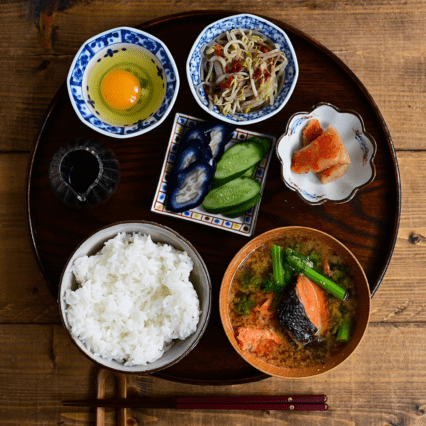
Making a Traditional Japanese Breakfast at Home
Best of all, the format is highly customizable. You can start simple and build from there.
Let’s explore how to build breakfast the Japanese way, along with a few of our favorite variations.
The classic Japanese breakfast formula
In many households, there are essentially two common setups: a simpler weekday breakfast and a more traditional, substantial version.
First: the 10- to 15-minute Weekday Breakfast
This version of breakfast is for those mornings where you want to get something nourishing, but have the natural time constraints of a school- or workday.
Like most meals built around ichiju sansai, it begins with rice. This is a great way to use leftover rice from the night before, though instant rice works well too. If you have a little extra time, you can also start a fresh batch in the rice cooker while preparing the rest of the meal.
For soup, a quick bowl of miso soup — even an instant version — helps round out the meal. A small side of leftover or pickled vegetables adds flavor and balance, and adding some nori (seaweed) provides an easy savory touch.
Another popular addition is natto, fermented soybeans that are often served over rice for breakfast in Japan. While natto is less common in North America, fans know its unique flavor and texture make it a beloved breakfast staple. Of course, you can find it at Uwajimaya.
The traditional full breakfast
A more traditional Japanese breakfast is a bit more substantial and often requires some ingredients to be prepared ahead of time.
Rice is still the foundation, accompanied by a hearty miso soup. Even then, miso soup remains quick and simple to prepare — often made with soft tofu and wakame seaweed for added texture and nourishment.
The sides are where this breakfast really shines. Along with pickled vegetables, nori, or natto, grilled fish is a classic addition that brings both protein and richness. An egg dish is also common, such as tamagoyaki, the lightly sweet Japanese rolled omelet, or an onsen egg.
An onsen egg is gently cooked in water at around 150°F for about 20 minutes, resulting in a silky, custardy texture that pairs beautifully with rice.
While this version takes a bit more preparation, it’s perfect for weekends or mornings when you want something more substantial and satisfying.
What to buy for Japanese homestyle breakfast
Building a Japanese breakfast begins with a few essential pantry staples: short-grain Japanese rice, dashi, miso paste, soy sauce, mirin, sake, and nori sheets.
For dashi, while traditional homemade stock can be complex, most households rely on convenient versions such as granules, tea bags, or concentrates. These quick forms of dashi are staples in everyday Japanese cooking.
For miso paste, there are the different types — white, red, or awase — and even within these, there’s lots of variety. If you’re less familiar with miso, we recommend starting with awase for its versatility, as it’s a mix between white and red — not too strong nor too mild.
Depending on your preferences, you may also want to keep a selection of tsukemono, or pickled vegetables, on hand. Popular choices include umeboshi pickled plums and takuan radish, though many vegetables can be quickly pickled overnight at home.
Other common ingredients for Japanese breakfasts include tofu, eggs, green onions, wakame seaweed, fish, and natto — much of it simply depends on your personal taste.
Building your breakfast
Here’s a simple step-by-step approach:
- Rice: When in doubt, or if you don’t have instant or leftover rice, make your rice the night before to save time the next morning.
- Soup: Miso soup can be as simple as a hot broth made from dashi and miso paste. If you have extra ingredients available, adding tofu, wakame, and chopped green onions makes it even more satisfying. Mushrooms, cabbage, spinach, or daikon are also excellent additions.
- Protein: If you like fish, a Japanese homestyle breakfast goes great with different types as one of your sides. Traditionally, a grilled mackerel is popular with its relatively mild flavor plus lots of protein and healthy unsaturated fats. Salmon is also a great choice if you prefer something richer.
- Egg: Egg dishes add another layer of protein. Tamagoyaki, the classic Japanese rolled omelet, is a popular choice. While it’s traditionally made in a rectangular pan called a makiyakinabe, a standard nonstick pan works just fine at home.
- Additional sides: The remaining sides can be tailored to your taste. Nori served with rice adds savory depth, while tsukemono bring brightness, acidity, and crunch. Umeboshi — the salty, tart Japanese pickled plum — offers a particularly bold contrast. Natto is another traditional option and is valued for its probiotic benefits.
Breakfast variations for every season
Much of the emphasis for ichiju sansai is on not just balance between the sides, rice, and soup, but on seasonality within that.
For example, in the winter, soup can be enhanced with mushrooms or napa cabbage, while spinach or other fresh greens can be added for the spring.
During summer, a lighter miso paste matches the season, along with a greater emphasis on the pickled and chilled vegetable sides. In autumn, the harvest of root vegetables and kabocha squash are great as an addition to miso soup or on their own, giving you a hearty breakfast to start the day as chilly weather sets in.
Ultimately, a traditional Japanese breakfast isn’t defined by one specific recipe. Instead, it’s about creating a balanced meal that brings together complementary flavors, textures, and nutrition.
As much as we love a bowl of cereal, there’s something about the wholesomeness of a Japanese breakfast that starts your day off perfectly.
And of course, if you feel the same, you can find all the ingredients at Uwajimaya!